Erosion Control in Austin, TX
Learn More About Our Complete Sprinkler Services


Erosion control is the set of methods that keep soil in place on your property. It uses drainage, ground cover, structures, and vegetation to stop water from carrying your yard away. In Austin, where expansive clay soils, Hill Country slopes, and flash-flood-intensity storms accelerate soil loss, erosion control protects foundations, landscaping, and drainage systems.
Sprinkler & Landscape Medics is a veteran-owned, NDS-certified drainage contractor and TCEQ-licensed irrigator serving the greater Austin metro. We diagnose erosion, drainage, and irrigation problems together with one crew. Call 512-710-7274 for a free estimate.
Water causes most erosion on residential and commercial properties. Rain hits the ground, flows downhill, and picks up soil as it moves. Without something to slow the water, hold the soil, or redirect the flow, that process repeats with every storm. Eventually the damage shows: bare patches, gullies, exposed roots, and dirt piling against your foundation.
In Central Texas, local soil and weather conditions accelerate the problem on your property beyond what most of the country deals with. That’s covered in detail further down the page.
An erosion control contractor inspects your property, identifies where and why soil is moving, and installs the right combination of drainage, structures, and vegetation to stop it.
The scope ranges from surface treatments on a bare patch in your yard to full regrading and retaining walls on a failing slope. Some jobs need only ground cover and mulch. Others need engineered walls, subsurface drainage, and new plantings working together.
Erosion is a water problem. A slope doesn’t wash out because the soil is weak. It washes out because water hit it too hard, too fast, with nowhere else to go.
And when a bed keeps eroding after you re-mulch it, the usual culprit is a broken sprinkler head soaking the same spot for months. Unrouted storm runoff causes the same problem.
Most erosion contractors treat the surface. They lay blankets, plant ground cover, and move on. Sprinkler & Landscape Medics starts with the water.
Our NDS drainage certification and TCEQ irrigation license (LI0025843) mean one crew handles the full job. We diagnose the erosion, trace it to the drainage or irrigation failure that’s feeding it, and fix all three in the same project. No second contractor. No one pointing fingers at someone else’s work.
We’re veteran-owned, founded by a U.S. Marine, and fully licensed and insured. Our team has served over 1,000 properties across Central Texas, and a portion of every service goes back into the community. Written pricing before any work begins.
Yes. We hold a TCEQ irrigation license (LI0025843) and an NDS drainage certification. Texas law under 30 TAC Chapter 344 requires a licensed irrigator to design and install any irrigation system. That matters for erosion work because irrigation leaks and overwatering are common triggers that unlicensed contractors can’t legally fix.
We hold a 4.9-star Google rating with over 147 verified reviews. Most erosion control companies don’t carry irrigation licensing and can’t touch the system that may be causing the problem.
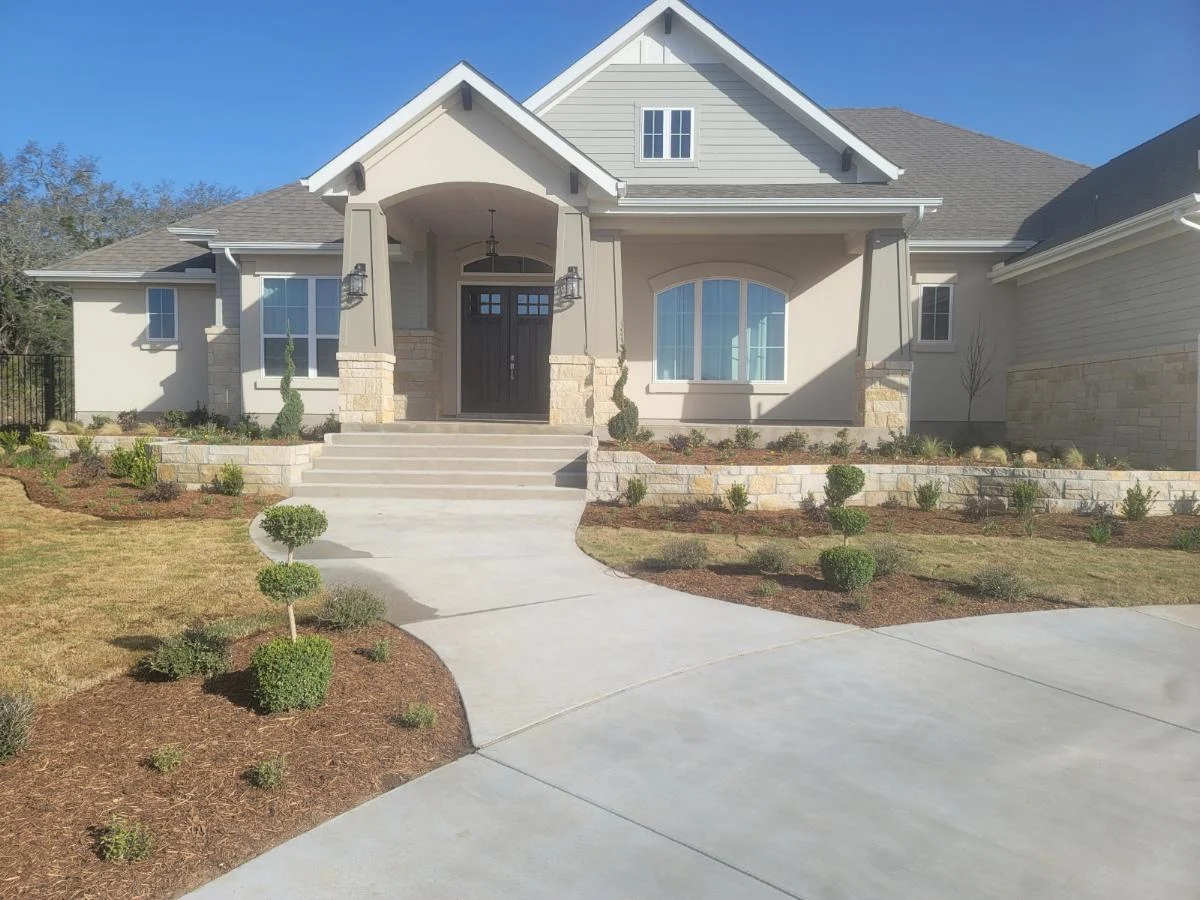
We match the method to the problem. Every erosion job starts with a site assessment of your property. We identify where the water is coming from, where the soil is going, and what needs to happen to stop both. Here are the methods we use across Austin:
For properties that need a full stabilization plan combining native plantings, terracing, drainage, and irrigation, we build that as part of our landscape design services.
The right method comes down to what’s causing the erosion and how far the damage has gone. A worn-down spot where the dog runs or foot traffic kills the turf may only need fresh ground cover, mulch, and a redirected downspout.
A bed that erodes every time it rains may need a French drain upstream to intercept the runoff before it reaches the bed.
Slopes are where things get layered. The steeper the grade and the heavier the runoff, the more methods you need working together. A steep slope might need a retaining wall at the base, regrading across the face, and a dry creek bed at the bottom to catch what flows down.
We assess the site and recommend the right combination during the free estimate.
You stop it by slowing the water, holding the soil, and establishing roots that lock everything in place long term.
On a moderate slope, native deep-root plantings combined with an erosion control blanket usually do the job. The blanket holds your soil while the roots take hold over one to two growing seasons. On a steeper slope, retaining walls or terracing hold the grade while riprap or a dry creek bed at the base catches what flows off.
The


