Cedar Park Landscaping | Landscape Design & Installation in Cedar Park, TX
Learn More About Our Complete Sprinkler Services



Sprinkler Medics designs and installs complete landscapes in Cedar Park, TX, with the irrigation and drainage built in by one licensed, veteran-owned crew. We hold Texas irrigation license LI0025843, NDS drainage certification, a 4.9-star Google rating from 147+ reviews, and have served over 1,000 Central Texas homes. From native planting beds to stone patios, we build landscapes engineered for Cedar Park’s thin limestone soil and local watering requirements. Call 512-710-7274 for a free estimate.

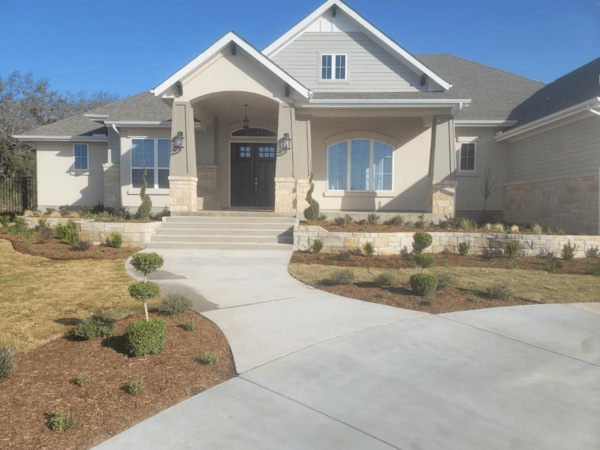
Sprinkler Medics provides full-scope residential landscaping across Cedar Park and the surrounding communities. Our services cover landscape design, planting bed installation (native, drought-tolerant, and xeriscape), sod, mulch, hardscape (patios, walkways, retaining walls, decorative stone), outdoor living spaces, landscape lighting, and non-invasive bamboo. We also install French drains, grading, and sprinkler systems as part of the landscape build.
Softscaping covers the living side of a landscape: plants, sod, trees, shrubs, and mulch. The built side is hardscaping: patios, walkways, retaining walls, stone borders, and decorative rock. Most Cedar Park projects combine both, with hardscape handling the layout and traffic flow and softscape adding the color and seasonal interest.
Xeriscaping uses drought-adapted native plants, efficient drip irrigation, and mulch or gravel beds to cut water use significantly compared to a traditional turf lawn. A conventional lawn in Cedar Park requires regular watering, and that water cost adds up over years of Central Texas summers. Many homeowners here are shifting to xeriscape beds in the front yard while keeping turf in the back where their family actually uses it.
Several Cedar Park landscaping companies claim to handle irrigation and design under one roof. Sprinkler Medics backs that claim with a displayed TCEQ irrigation license, NDS drainage certification, and an irrigation-first track record that started before we added landscape design to the business. The crew that lays your flagstone is the same crew that installs your drip zones and routes your drainage. No subcontractors, no handoffs.
We are veteran-owned and Marine-led, with a track record across 1,000+ Central Texas homes and a 4.9-star Google rating. A portion of every service goes back into the Cedar Park and Austin communities we work in. Every estimate is written, upfront, and free.
Hiring one company for the plants and another for the sprinklers creates problems that show up the first time the system runs. Many Cedar Park landscapers work this way, and irrigation heads land in the wrong spots because the irrigation contractor never saw the planting plan, and drainage gets skipped entirely when neither company owns it. When one crew designs the beds and routes the drainage and irrigation as a single scope of work, every piece fits the first time. You deal with one estimate and one schedule.
Every landscape project follows the same sequence from first visit through final walkthrough.
We map and flag every head, valve box, and line before breaking ground. We pull components out of the work zone, reroute what needs to move, and reinstall everything to match the new bed layout and grade. Because we hold a TCEQ irrigation license, we handle that work ourselves rather than bringing in a separate irrigation contractor after the landscape crew leaves.
Cedar Park sits on the Balcones Escarpment where thin, limestone-rich Edwards Plateau soil meets heavier Blackland Prairie clay. That geology limits what thrives in your yard long-term and makes soil preparation a required step before any planting goes in.
The Lady Bird Johnson Wildflower Center and Texas A&M AgriLife Extension recommend several native plants for this area. Texas Sage, Flame Acanthus, Salvia greggii, Turk’s Cap, Black-Eyed Susan, and Lantana all perform well in Cedar Park’s conditions. For turf, Bermuda and Zoysia handle full sun. St. Augustine is the better choice for shaded areas, and Buffalo grass works on lots where water use needs to stay low. Hardscape materials that hold up here include Texas limestone, flagstone, decomposed granite, and river rock.
Cedar Park sits over the Edwards Aquifer recharge zone, and the city enforces seasonal watering schedules that limit irrigation frequency throughout the year. A landscape built around native and drought-adapted species uses less water and costs less to maintain over the life of the yard. Designing for water efficiency from the start saves you money compared to retrofitting a thirsty landscape after your first full summer water bill arrives.
Yes. Cedar Park’s mature live oaks and cedar elms are susceptible to oak wilt, a lethal fungal disease that spreads through root grafts and insect-carried spores. The Texas A&M Forest Service recommends avoiding all oak pruning from February 1 through June 30, which is the highest-risk transmission window. We schedule any tree work and bed construction that involves cutting near oaks outside that period to protect your existing trees.


