Hardscaping in Austin, TX
Learn More About Our Complete Sprinkler Services



Sprinkler & Landscape Medics designs and installs custom hardscaping across Austin and Central Texas, including patios, retaining walls, walkways, driveways, fire pits, and outdoor kitchens. We build with limestone, flagstone, and pavers engineered for local clay soil and drainage. As a veteran-owned, TCEQ-licensed, NDS drainage-certified company, we handle hardscape, drainage, and irrigation on every project with one licensed crew and no subcontractors. Call 512-710-7274 for a free estimate.
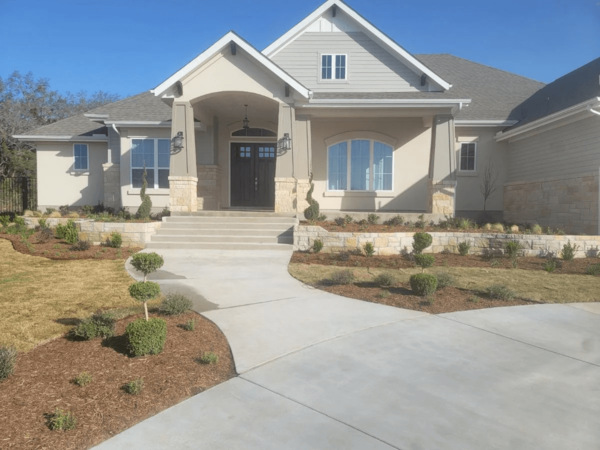
Hardscaping refers to the permanent, non-living structural elements of a landscape. Patios, walls, walkways, driveways, and outdoor living features all fall under hardscaping because they are built from durable materials rather than planted or grown. These structures give a yard its shape and define how you move through your outdoor space. They also control how water drains across your property, which in Austin is not a secondary consideration. Hardscaping works alongside softscaping to form a complete landscape design, with each side doing a different job.
Hardscaping covers everything built: patios, walls, walkways, and every permanent structure in a yard. Softscaping is the opposite side, the living elements: plants, sod, trees, shrubs, and mulch beds. A well-designed yard needs both working together. The hardscape handles structure and water flow, and the softscape fills in color, shade, and the seasonal detail that brings the space to life.
Hardscaping in Austin lives or dies on what happens underneath the stone. Expansive Blackland Prairie clay swells when wet and shrinks when dry. A patio or retaining wall built on top of it without proper grading and drainage will crack, heave, or settle within a few years. Sprinkler & Landscape Medics is an NDS-certified drainage contractor and TCEQ-licensed irrigator (LI0025843), so we engineer the base, grading, and drainage before a single paver goes down.
One licensed crew handles the full scope on every project: hardscape construction, drainage integration, irrigation reroutes, and softscape restoration. No subcontractors, no coordination gaps between trades. We are veteran-owned and Marine-led, carry a 4.9-star Google rating with more than 147 reviews, and have served over 1,000 homes across Central Texas. A portion of every service goes back into the Austin communities we work in. Every estimate is written, upfront, and free.
Ask three questions before you sign anything. First, will the same crew that builds the patio also handle drainage and irrigation, or are those subcontracted out? Separate crews mean separate schedules and no single team standing behind the result. Second, can they show you their state irrigation license number and proof of liability insurance, not just claim they have them? Third, do their reviews mention the specific work they did, or are they generic five-star entries with no detail? The answers tell you more than any sales pitch.
Sprinkler & Landscape Medics builds every major category of residential hardscape across Austin and the surrounding communities. Our service list covers:
A hardscaping contractor builds the permanent outdoor structures that define how a yard looks, functions, and drains. Project scope ranges from a single flagstone walkway that takes a day to a full outdoor living build that takes several weeks. A larger project might include a kitchen, fireplace, seating walls, and terraced levels across your entire backyard. All of it is built from stone, concrete, pavers, or masonry and designed to last decades with minimal maintenance.
Choosing hardscape materials in Austin means accounting for sustained heat, intense UV exposure, heavy storm cycles, and expansive clay soil that shifts with every wet-dry season. Not every material holds up equally.
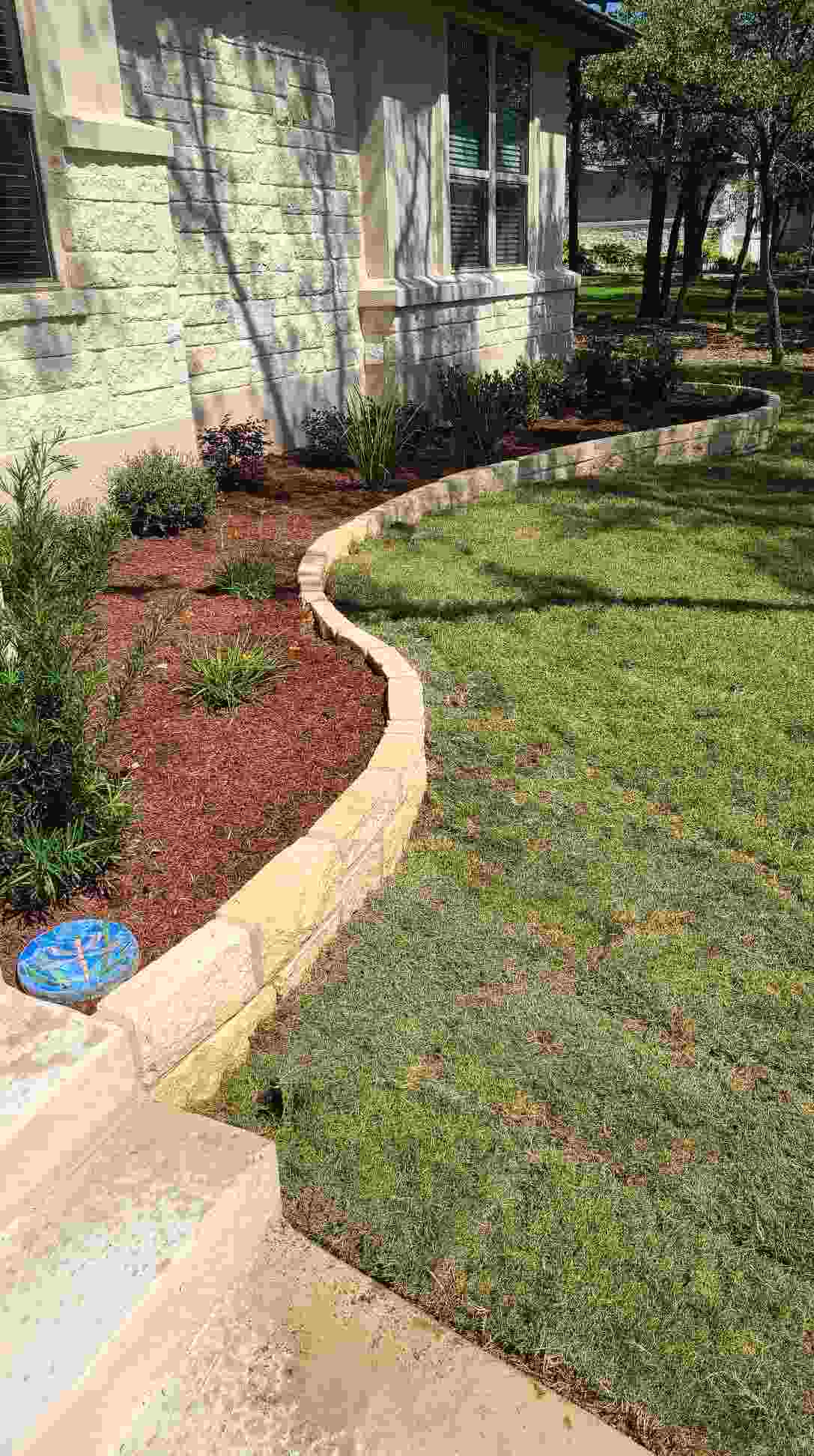
Limestone, flagstone, and interlocking pavers perform best overall. Beyond that, it depends on what you are building and how your lot behaves. For patios and walkways on clay soil, interlocking pavers outperform rigid surfaces because they absorb ground movement instead of fighting it. For retaining walls and borders, native limestone is the default for a reason: it handles heat, matches Central Texas architecture, and comes from local quarries. Travertine and premium flagstone earn their higher price point on pool surrounds and high-visibility entertaining areas where the finish quality shows. We walk through material options during the site visit so the recommendation fits your project, your lot, and your budget.
Retaining walls fail in Austin when the drainage behind them is wrong. Expansive clay traps water against the back of the wall, hydrostatic pressure builds, and the structure leans, cracks, or collapses. Proper wall construction requires engineered drainage backfill, weep holes or drain pipe at the footing, and grading that directs water away from the wall and your foundation.
Sprinkler & Landscape Medics integrates French drains and yard drainage behind and beneath retaining walls, patios, and permeable paver systems as part of every hardscape build. Our NDS drainage certification means the drainage design is engineered to the same standard as the hardscape itself. On sloped lots, we combine terraced walls with subsurface drainage to convert steep, eroding hillsides into level, usable outdoor space for your property without redirecting water onto neighboring lots.
Yes. Slopes and clay soil are two of the most common site conditions we work on across Austin. Terraced retaining walls reshape steep grades into flat, buildable areas, and a properly compacted base isolates the paver surface from the reactive clay or caliche beneath it. The base must reach stable material below the shrink-swell zone, and on clay lots that means excavation depth matters more than it would on sandy or rocky ground. Skipping base prep on expansive clay is the primary reason budget hardscape installations crack and heave within a couple of years.
Every hardscape project follows the same sequence from first conversation through final walkthrough, and one crew handles the full build.
Most residential hardscape projects in Austin take one to three weeks from excavation through final walkthrough. A simple patio on a flat, accessible lot moves faster than a multi-feature build with retaining walls, terracing, and integrated drainage. Material lead times, permit timelines, and weather can extend the schedule on larger or more complex projects. We confirm arrival windows before every work day and keep you updated if conditions change.
Standard at-grade patios, walkways, and gravel areas in Austin typically do not require a building permit. Retaining walls are the most common exception. The City of Austin exempts retaining walls under four feet in height from permit requirements. Walls that exceed four feet, support a driveway or structure, or sit within a flood hazard area require a permit from the Development Services Department. Taller or loaded walls may also need a structural engineer’s seal. Pergolas and patio covers that create roofed space also trigger permit review. HOA and POA approval is a separate step that applies across many Austin-area communities regardless of whether the city requires a permit.
We handle permits during the planning phase so they never stall your project. We pull the site dimensions, check setback and height requirements against the city code, confirm whether an engineer’s seal is needed, and submit HOA or POA applications where required. You get a clear answer on permits before we schedule the build, not after the crew has already started.

Standard at-grade patios, walkways, and gravel areas in Austin typically do not require a building permit. Retaining walls are the most common exception. The City of Austin exempts retaining walls under four feet in height from permit requirements. Walls that exceed four feet, support a driveway or structure, or sit within a flood hazard area require a permit from the Development Services Department. Taller or loaded walls may also need a structural engineer’s seal. Pergolas and patio covers that create roofed space also trigger permit review. HOA and POA approval is a separate step that applies across many Austin-area communities regardless of whether the city requires a permit.
We handle permits during the planning phase so they never stall your project. We pull the site dimensions, check setback and height requirements against the city code, confirm whether an engineer’s seal is needed, and submit HOA or POA applications where required. You get a clear answer on permits before we schedule the build, not after the crew has already started.
Hardscaping cost in Austin depends on the square footage of the project, the materials you choose, design complexity, and how much site preparation your lot requires. Grading, drainage, and base compaction on expansive clay add labor that you would not pay for on a flat sandy lot.
Simple patios and walkways typically start from a few thousand dollars. Mid-range projects with retaining walls, a patio, and defined walkways commonly fall between $5,000 and $30,000. Full outdoor living builds that combine a kitchen, fireplace, seating walls, and multiple hardscape zones can run $20,000 to $50,000 or more depending on materials and scope.
An accurate number requires an on-site visit because two properties on the same street can have very different grading, drainage, and access conditions. Getting two or three written estimates from contractors who have actually walked your lot is the only way to compare real numbers. Be cautious with quotes that skip the site visit entirely, since those estimates rarely account for what is underground. Sprinkler & Landscape Medics provides a free written estimate after visiting your property so the pricing reflects the actual scope of work.
Austin homeowners ask these questions most often when planning a hardscape project.
Yes. Well-designed hardscaping typically increases home value by 10 to 20 percent, and patios, outdoor kitchens, and fire features consistently rank among the strongest outdoor improvements for resale. The return is highest when the hardscape solves a functional problem. Converting a steep slope into usable entertaining space or replacing a mud-prone yard with a paver patio that drains properly are the kinds of projects that pay back at resale.
Most hardscape materials require minimal work beyond periodic cleaning and replenishing joint sand in paver gaps. Sealed surfaces like travertine and certain pavers benefit from resealing every two to three years to prevent UV fading and mineral buildup from Austin’s hard water. Checking for settled pavers or shifted stones after heavy rains takes a few minutes and prevents small issues from becoming larger repairs. Sprinkler & Landscape Medics offers seasonal maintenance memberships that include hardscape inspection alongside irrigation and drainage checks.
Your outdoor space should work as hard as it looks. Sprinkler & Landscape Medics is NDS-certified, TCEQ-licensed, and veteran-owned, with one crew handling design, drainage, irrigation, and construction from the first visit through final walkthrough.
Call 512-710-7274 or request your free estimate online to get started. We serve Austin, Cedar Park, Georgetown, Round Rock, Leander, Pflugerville, Bee Cave, Lakeway, West Lake Hills, and communities across Travis County and Williamson County.

Irrigation License # LI0025843