Manor Landscaping | Landscape Design & Installation in Manor, TX
Learn More About Our Complete Sprinkler Services



Sprinkler Medics is a veteran-owned landscaping company serving Manor, TX (78653), designing and installing landscapes with irrigation and drainage built in by one licensed crew. We specialize in new-construction build-outs and black-gumbo clay yards across Manor’s fast-growing subdivisions.
TCEQ Irrigator License #LI0025843, NDS-certified drainage, 1,000+ Central Texas homes served, 4.9-star Google rating across 147+ reviews. Call 512-710-7274 for a free estimate.


Sprinkler Medics handles every part of a Manor landscape project from design through installation. Here’s what we build:
Most Manor new builds leave you with compacted clay and minimal topsoil. The work starts with what’s under the surface: correcting the grade, amending the soil, and getting drainage in place before anything gets planted or sodded.
Manor has plenty of lawn-mowing crews calling themselves landscapers. Sprinkler Medics is a design-and-install company with credentials the mowing operators don’t carry.
Yes. TCEQ 30 TAC Chapter 344 makes it illegal for anyone without an irrigator license to design or install a sprinkler system in Texas. Sprinkler Medics holds License #LI0025843, so your irrigation goes in legally and correctly as part of the landscape build.

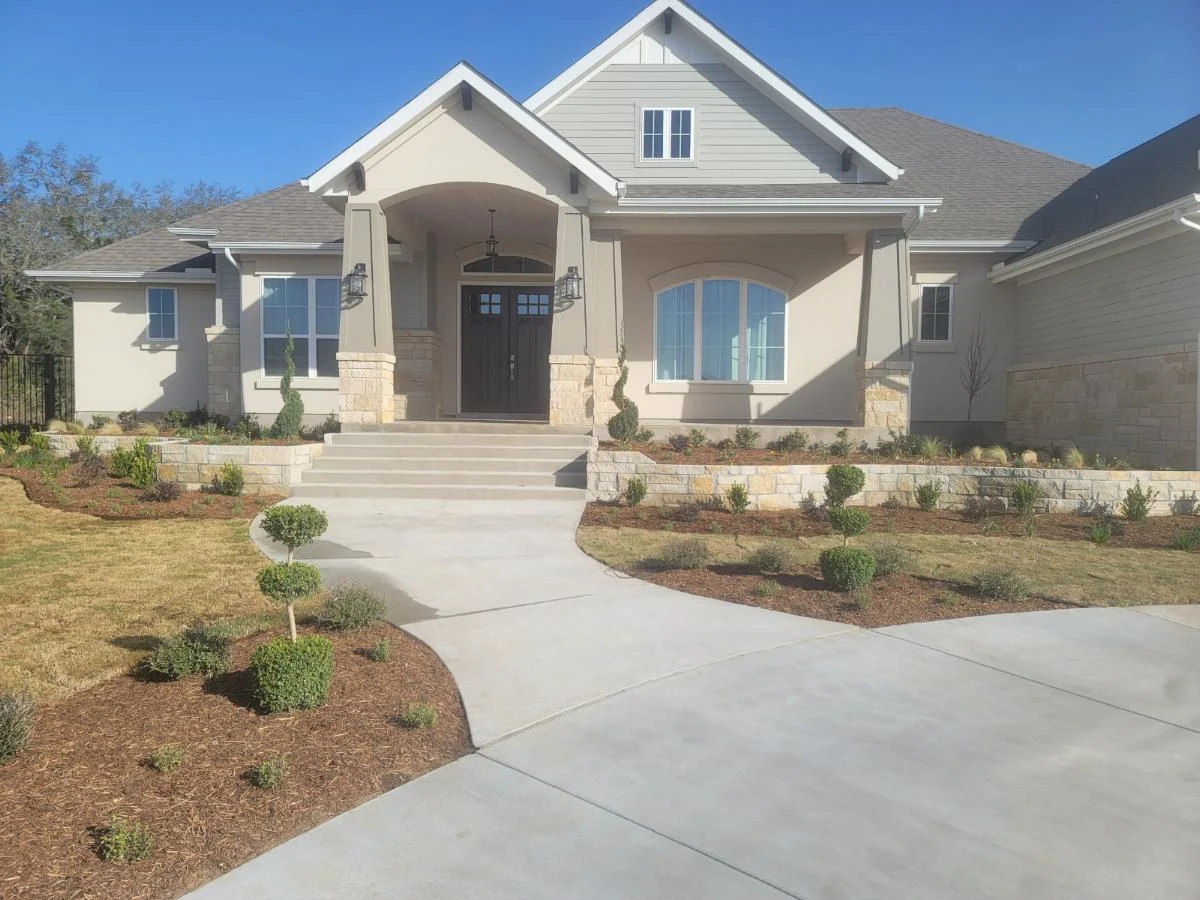
Every project starts with a consultation and site evaluation at your Manor property.
Most residential landscape projects take one to two weeks from groundbreaking to final walkthrough. A new-build lot with full grading, drainage, irrigation, planting, and sod typically takes two to three weeks. Smaller projects like a front-yard renovation or planting bed install can wrap in three to five days.
Manor is one of the fastest-growing towns in Travis County. Most of that growth sits on deep Blackland Prairie clay that builders have compacted and stripped before handing you the lot.
New subdivisions like ShadowGlen, Whisper Valley, and Presidential Glen start with bare, graded yards where the topsoil has been scraped and the clay beneath has been packed by heavy equipment. Before planting or sodding, you have to amend that soil, fix the grade, and get drainage in place. Skip any of those and your sod, your plants, and your foundation pay for it.
Stormwater on Manor properties drains into the Gilleland Creek and Wilbarger Creek watersheds. The City of Manor’s MS4 program under the Clean Water Act requires that yard runoff not carry soil or debris into storm drains. Drainage and grading have to be in the plan, not added after the fact.
Black-gumbo clay swells when wet and cracks when dry. That shrink-swell cycle compacts the soil further each season, drowns roots during rain, and starves them of air during drought. Without proper drainage, water pools against your foundation and sits on the surface long after the rain stops. French drains, grading corrections, and dry creek beds move water off the surface and away from the foundation before it saturates the clay beneath.
Texas Sage, Salvia greggii, Turk’s Cap, Lantana, Black-Eyed Susan, and Blackfoot Daisy handle Manor’s heat and heavy clay. These are Central Texas natives suited to USDA Zone 8b, recommended by the Lady Bird Johnson Wildflower Center and Texas A&M AgriLife Extension. For turf, Bermuda and Zoysia need less water than St. Augustine. Buffalo grass needs the least of all. Avoid pruning live oaks and cedar elms between February and June to prevent oak wilt spread.


