Paver Installation in Austin, TX
Learn More About Our Complete Sprinkler Services



Sprinkler & Landscape Medics installs paver patios, driveways, walkways, and pool decks across Austin and Central Texas. Every surface we build sits on a properly compacted base with drainage engineered to handle Austin’s expansive clay soil.
We’re a veteran-owned, TCEQ-licensed, and NDS-certified drainage contractor, which means the same crew that lays your pavers also engineers the water management underneath them. Call 512-710-7274 for a free estimate with the scope in writing.
Sprinkler & Landscape Medics builds paver surfaces for every part of your Austin property, from high-traffic driveways to backyard entertaining spaces. Here’s what we install as part of our landscape design and hardscaping services:
Yes. We install pavers around existing structures and tie them into what’s already in place. Pool decks, fire pit surrounds, and outdoor kitchen pads each require specific base prep, drainage, and edge detailing, and we protect existing plumbing, gas, and electrical runs during excavation.
Sprinkler & Landscape Medics is the only Austin paver contractor that also handles the drainage and irrigation beneath your surface. That combination keeps pavers level and stable in soil that moves.
Water is the primary reason paver surfaces fail in Austin. Without proper slope and drainage, rainwater saturates the soil beneath the base, and that soil loses its load-bearing strength. The pavers above settle, shift, or heave, and the only fix is a full tear-out.
We work with a full range of paver materials. What makes sense for your project depends on the look you’re going for, how the surface will be used, and what you want to spend.
For most Austin homeowners, concrete or brick pavers are the right call. They hold up well in the heat and clay, look good, and don’t break the budget. If heat underfoot is a priority near a pool, travertine is worth the premium. Talk to us about permeable pavers if your property is close to its impervious cover limit.
Base preparation and drainage determine whether your paver surface lasts 20 years or sinks in two. Here’s how we build every project:
By building a base deep enough and draining water away from it. Austin’s Blackland Prairie clay swells when it absorbs rain and shrinks during drought, and that cycle creates uneven pressure beneath any surface that sits on a shallow or uncompacted base. A deep, compacted aggregate base distributes that movement evenly so the pavers stay level. Drainage grading and, where needed, subsurface drains keep water from pooling under the base.
Several factors move the total cost of a paver project. The biggest ones are material choice, project size, and how much excavation your soil requires. Drainage needs, demolition of existing concrete, pattern complexity, and site access also affect the number. Clay soil in Austin drives higher excavation and base-prep costs than areas with sandy or limestone soil because the base needs to be deeper and compaction takes more passes.
Demolishing and hauling away an existing slab before new pavers go down adds to the total, typically $2 to $6 per square foot depending on thickness.
Most Austin paver patio installations cost between $8 and $25 per square foot. Concrete pavers start around $10 per square foot, and brick runs $12 to $20. At the premium end, natural stone and travertine range from $20 to $30. A 12×12 patio (144 square feet) typically falls between $1,400 and $2,500. A free on-site estimate is the most accurate way to price your specific project.
Austin’s Blackland Prairie clay, drought-and-downpour swings, and occasional hard freezes all stress hardscape surfaces. Every one of those conditions acts on the soil beneath the pavers. The pavers are the surface you see; base prep and drainage are what keep it flat.
Proper base depth and compaction handle the shrink-swell cycle so the surface stays level through wet and dry seasons. Freeze events add another risk: water trapped in shallow joints or an undersized base can expand and push pavers out of alignment. Where projects sit adjacent to lawn or beds, we coordinate sod installation and grading so the finished landscape drains as one system.
Most paver patios that keep the property within its 45% impervious cover limit do not require a City of Austin permit. Replacing an existing driveway within the same footprint typically doesn’t trigger a permit either. New driveways, projects in the Barton Springs Zone, or work that pushes impervious cover past the allowance may need review from Development Services. Permeable pavers can reduce impervious cover impact, which matters for properties near their limit.
Sprinkler & Landscape Medics installs pavers across Austin and a 50-mile Central Texas radius. We work in Cedar Park, Round Rock, Georgetown, Pflugerville, Leander, Liberty Hill, Manor, Taylor, Lakeway, Bee Cave, West Lake Hills, and Hutto.
Yes. We serve the full Greater Austin metro across Travis County and Williamson County. If your property is within 50 miles of our Central Texas base, we can get to you.
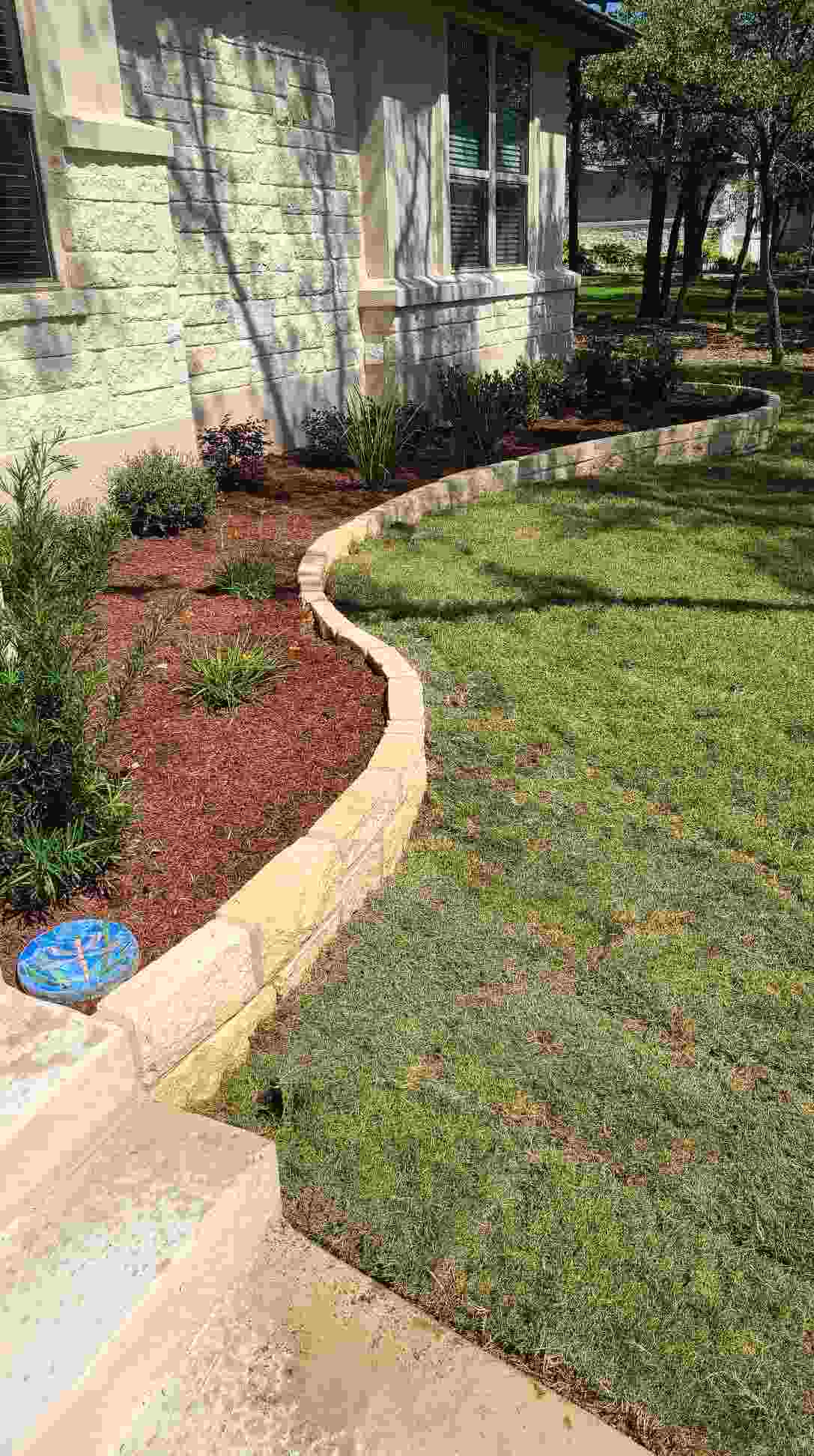

A 20×20 paver patio covers 400 square feet and typically costs $4,000 to $6,000 or more in Austin. The total depends on paver material, base-prep requirements for your soil, and whether an existing concrete surface needs to be demolished and hauled away first.
Most residential paver projects take three to five days from excavation to final compaction. Smaller patios can be done in two to three days. Larger driveways or projects requiring demolition of an existing surface may take a full week.
A compacted aggregate base (crushed stone or road base) at a depth matched to the project type and soil conditions. Clay expands and contracts with moisture, so the base needs to be deep enough to accommodate that movement. Geotextile fabric between the subgrade and aggregate prevents clay from migrating into the base over time.
Yes. A well-built paver patio increases usable living space and curb appeal. Industry data on outdoor living improvements suggests a return of 60 to 80% of the project cost at resale. In Austin’s housing market, finished outdoor space is a consistent selling point.
For Austin’s expansive clay soil, pavers are the more durable long-term choice. Interlocking paver units flex with soil movement instead of cracking the way a solid slab does, and damaged pavers can be replaced one at a time. Poured concrete costs less upfront but cracks and settles more readily on clay.
Polymeric sand fills the joints between pavers and hardens when activated with water, creating a firm seal that blocks weeds, ants, and joint erosion. Proper edge restraints keep the paver field tight so joints don’t open over time. Reapplying polymeric sand every few years maintains the seal.
Your pavers, your drainage, and your irrigation handled by one licensed crew with one written estimate. No hidden costs, and the price is locked before we start.
Call 512-710-7274 or contact us online to schedule your free on-site estimate. We serve Austin and communities across Central Texas.

Irrigation License # LI0025843