
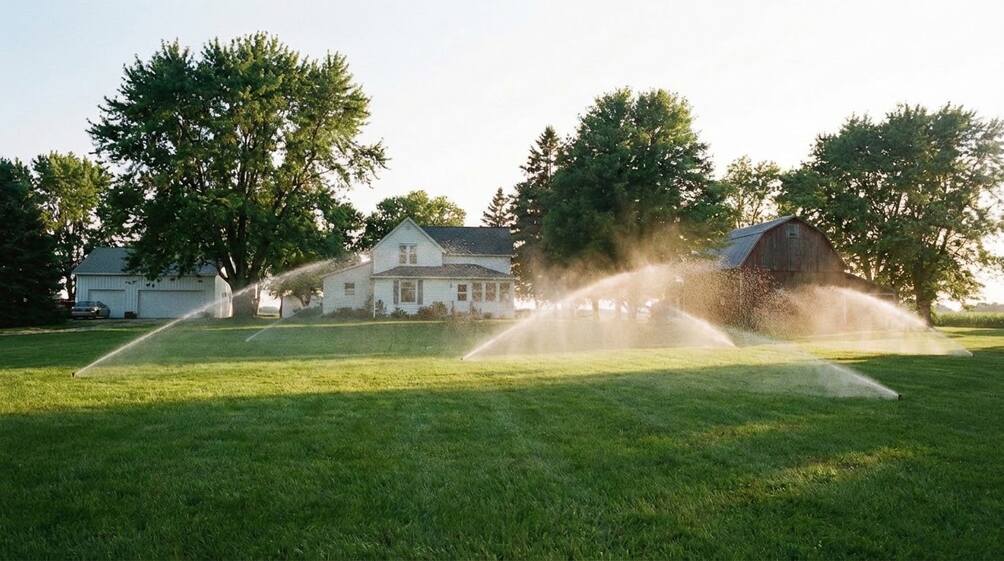
How much does it cost to install a sprinkler system?
A sprinkler system installation in Austin typically runs between $4,250 and $6,500 for an average suburban yard, though that number moves in both directions depending on zone count, soil conditions, and the equipment your installer specifies. Knowing what drives the price before you call for quotes helps you compare bids accurately and avoid surprises when the final invoice arrives.
In Central Texas, a few regional factors push costs outside the national averages you’ll find on home improvement websites. Caliche rock and dense clay soil slow trenching. Austin’s one-day-per-week watering schedule means your system needs to be designed efficiently from the start, which affects zone count and equipment selection. Those details show up in your estimate whether or not the contractor explains them.
At Sprinkler & Landscape Medics of Austin, we are a licensed, insured, veteran-owned team serving Greater Austin, Cedar Park, Round Rock, Georgetown, Pflugerville, and the surrounding area. We offer free estimates, put every scope in writing, and design every system around your specific yard conditions and Austin Water’s current schedule requirements.
Austin Sprinkler System Installation Cost Ranges
In the Austin market, each irrigation zone typically adds $500 to $900 to the total installation cost, depending on which equipment you choose and the complexity of the area it covers. Zone count is the single biggest driver of your overall project price, since every zone means another solenoid valve, more pipe, more wiring, and more labor. In Central Texas, where yards often combine St. Augustine turf with flower beds and native plantings, you may need more zones than a national average would suggest.
| Irrigated Area (sq ft) | Typical Zone Count | Estimated Budget Range | Notes |
| Up to 2,500 | 2–3 | Lower end of range | Small lot, simple layout |
| 2,500–5,000 | 3–5 | Mid range | Average Austin suburban yard |
| 5,000–10,000 | 5–8 | Mid-to-upper range | Larger lots, mixed turf and beds |
| 10,000+ | 8+ | Upper range and above | Custom quote strongly recommended |
What Drives the Price in Central Texas (Zones, Yard Size, Pressure, Soil, Equipment)
Several variables affect what you’ll pay for a sprinkler system in Central Texas, and some of them are specific to this region.
- Zone count is the single biggest driver of total cost. More zones mean more valves, more pipe, more wiring, and more labor.
- Your yard’s size and layout matter too. Irregular lot shapes, slopes, and multiple irrigated areas add complexity and cost.
- Your installer will size each zone to your available water pressure. Low pressure or a small meter may require additional pressure-regulation hardware.
- Soil conditions affect labor time. Rocky caliche or dense clay, both common across Central Texas, can slow trenching considerably.
- The equipment you choose affects your final number. Smart controllers, high-efficiency rotary nozzles, drip zones for beds, and rain and freeze sensors all improve performance but add to the upfront cost.
Two of those factors deserve a closer look: zone count and soil conditions.
How Many Zones Do I Need for My Yard and Why Does That Change Cost?
Most residential yards in Austin require somewhere between five to eight irrigation zones, though that number depends on the size, variety, and layout of what you’re watering.
Cost Breakdown: Materials, Labor, Permits, and Backflow Protection
A professional sprinkler installation quote in Austin will generally cover several categories of cost, and knowing what each one includes helps you compare bids with confidence. Here’s what you should expect to see.
What Parts Are Included in a Typical Sprinkler Installation Quote?
Your quote will typically include the following components:
- Your irrigation controller programs which zones water, when, and for how long. Smart controllers like Rachio or Rain Bird can also auto-adjust based on weather.
- The valve manifold houses each zone’s solenoid valve, which opens and closes water flow to that zone on schedule.
- Mainline pipe carries water from the source to the manifold; lateral lines branch out from there to each zone’s sprinkler heads.
- Your installer will select the right heads for each area: pop-up spray heads for turf, gear-driven rotors or rotary nozzles for larger zones, and drip emitters or dripline for planting beds.
- A rain and freeze sensor prevents the system from running during rain or freezing temperatures. Texas recommends or requires this on every system.
- A backflow prevention assembly protects your drinking water from contamination. Most Texas water providers require it.
- Trenching and restoration covers the labor to dig pipe trenches and restore your lawn surface afterward. This is typically the largest labor cost in the project.
- Low-voltage wiring connects the controller to each zone valve.
Do I Need Backflow Prevention for an Irrigation System in Texas?
Yes, you do. Texas requires a backflow prevention assembly on all landscape irrigation systems to protect the public water supply. When irrigation water flows back into your drinking water lines, it can cause contamination. That’s what a cross-connection is, and it’s why both Austin Water and the state require backflow protection under Texas state rules (30 TAC Chapter 344). The two most common assembly types are a double check assembly (DCA), which works well for most residential installations, and a reduced pressure zone assembly (RPZ), which your water provider requires in certain situations. Your licensed irrigator can confirm which type applies to your property.
Several upgrades can raise an initial quote. Here’s what to expect if you choose to add them.
| Upgrade Item | What It Does | Typical Cost Impact |
| Smart controller (e.g., Rachio) | Automates scheduling, weather-adjusts watering | Adds to base controller cost |
| Drip irrigation conversion for beds | Delivers water directly to plant roots, reduces overspray | Per-zone add-on |
| High-efficiency rotary nozzles | Reduces runoff, improves coverage uniformity | Per-head upcharge |
| Pressure regulation | Protects heads from high-pressure damage | Per-zone or whole-system |
| Additional zones | Each zone adds valve, pipe, wiring, and labor | Per-zone add-on |
| Rain and freeze sensor | Prevents watering during rain or freeze events | One-time add-on |
Costs vary by system size, brand, and site conditions. Ask your installer to itemize upgrades separately so you can compare options.
How Austin Watering Rules Can Affect System Design and Cost
Austin’s watering schedule directly shapes how your system should be designed. If your system isn’t built to cover your yard efficiently within your assigned window, you’ll end up with dry spots or the temptation to water outside your schedule.
Can a Smart Controller Help with Austin Watering Schedules?
Given Austin’s one-day limit, a smart controller earns its cost quickly. A device like Rachio adjusts run times based on recent rainfall, current temperatures, and seasonal factors, helping your system make the most of that single window without over- or under-watering. Over time, that efficiency can offset some of the upfront investment through lower water bills. To confirm your assigned watering day and review current schedule rules, visit Austin Water’s website directly.
FAQs About Sprinkler System Installation Costs
What Is the Cheapest Way to Install Lawn Irrigation?
Drip irrigation for planting beds combined with a simple timer-based spray system for turf is often the most budget-friendly starting point. You can also reduce overall project cost by bundling irrigation work with an existing landscaping or sod project, since the ground is already being disturbed. In Texas, full in-ground irrigation installation requires a licensed irrigator under TCEQ rules, so bids that seem unusually low are worth questioning carefully before you commit.
Is It Cheaper to Install Sprinklers During Landscaping or Sod Replacement?
Yes, bundling irrigation installation with an active landscaping or sod project typically reduces the overall cost. When the ground is already being disturbed for grading or sod prep, trenching and restoration become less time-intensive, and you avoid a separate mobilization charge for the irrigation crew. If you’re planning a sod installation or landscape redesign, ask about combining it with irrigation work. Sprinkler & Landscape Medics handles both, so you can get everything done in a single project without coordinating multiple contractors.
Get a Free Sprinkler Installation Estimate in Austin
Sprinkler system installation in Austin runs between $4,250 and $8,000 for most suburban yards, but the number that matters is the one built around your specific property. Zone count, soil conditions, equipment selection, and how well the system is designed for Austin’s one-day watering schedule all shift that figure in ways a national average cannot account for.
Getting an accurate price means calling a licensed irrigator who will walk your yard, assess your water pressure, and put a written scope in front of you before any work begins. A bid that skips that process is not a comparable estimate.
At Sprinkler & Landscape Medics of Austin, we are a TCEQ-licensed, veteran-owned irrigation company serving Greater Austin, Cedar Park, Round Rock, Georgetown, Pflugerville, and the surrounding area. Ready for reliable sprinkler installation from a veteran-owned team you can trust? Reach out to Sprinkler & Landscape Medics of Austin today for a free estimate.



Leave a Reply
Want to join the discussion?Feel free to contribute!